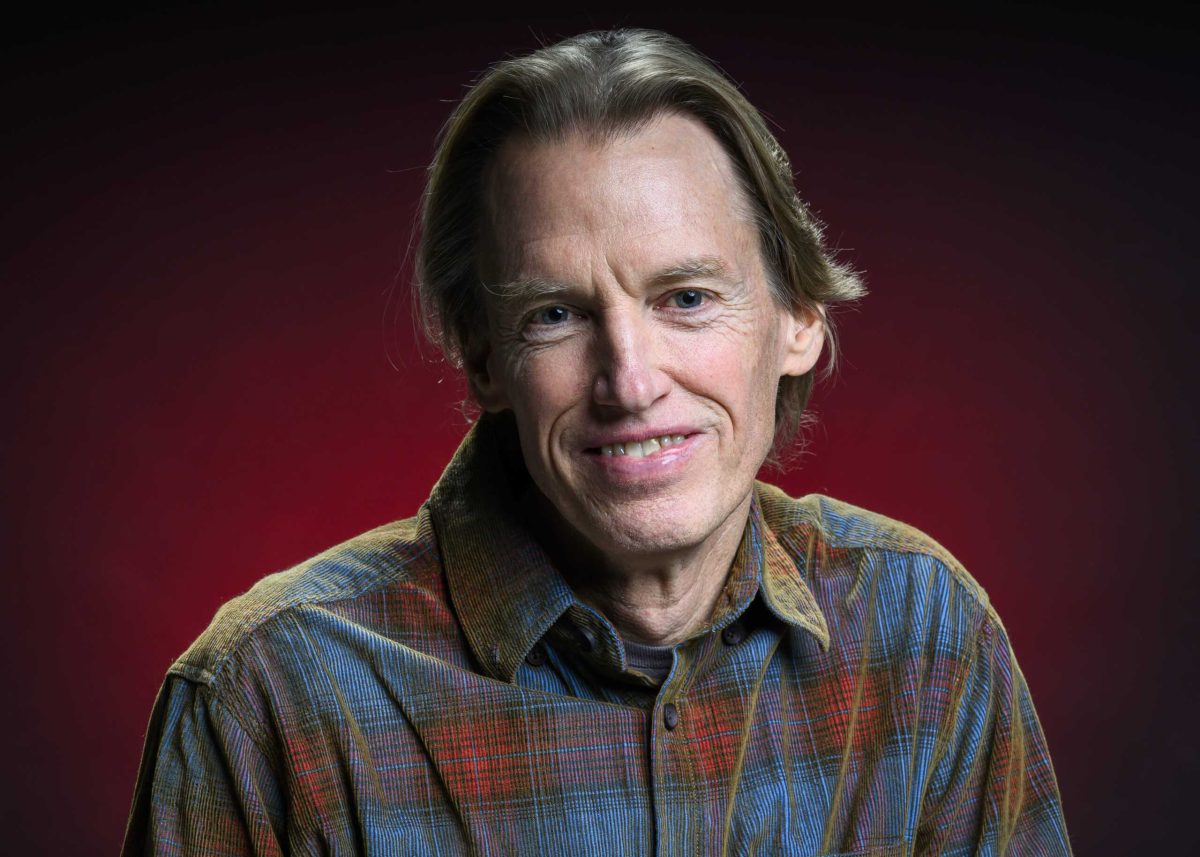
SAC Photography Lab Technician Mark Magavern brings 31 years of experience and humble service to SAC’s multimedia journalism program. Photo by Jacob R. Lopez.
When Mark Magavern was a 21-year-old intern at the Houston Post in 1989, he nearly gave his life for journalism.
The academic lab technician in SAC’s journalism and photography program was assigned to cover Hurricane Hugo in Kehma, Texas, and he drove into flooded streets and waded into water up to his waist on his way to capture a dynamic photo. When he got back to his car, it wouldn’t start. The newspaper staffer who picked Magavern up asked him for gas money before driving him back to the office.
“By the time we got back, I missed the deadline, so they didn’t even use my picture,” Magavern recalled.
From near-death hurricane coverage to award-winning photo stories, Magavern’s decades of experience in photojournalism are a vital component of SAC’s multimedia journalism program and how its faculty and staff train the next generation of visual journalists. Over the 31 years that Magavern has served the program, he’s seen a lot of students come through the newsroom, and many of them credit Magavern for helping them launch their professional careers.
SAC Journalism Instructor Ethan E. Rocke said Magavern’s steady presence, practical guidance and deep commitment to student success have made him one of the most influential figures in the program’s history.
“In many ways, Mark is the glue that holds our journalism and photography program together,” Rocke said. “He’s been here for 31 years, quietly and humbly serving in the photo lab, issuing gear, helping students improve their photography and providing valuable perspective on the craft and profession of photojournalism.”
 As a staff photographer for the Ranger, Mark Magavern posed for an environmental portrait on the roof of the Nail Technical Center in the late 80’s before Chance Academic Center and several parking garages were built. Photo by Rodolfo Gonzalez.
 Ranger Advisor Jerry Townsend explains to journalism student Mark Magavern how to use a proportion wheel, the plastic disc newspaper editors used to determine the size an image needed to be when it ran in the newspaper. Archive photo.
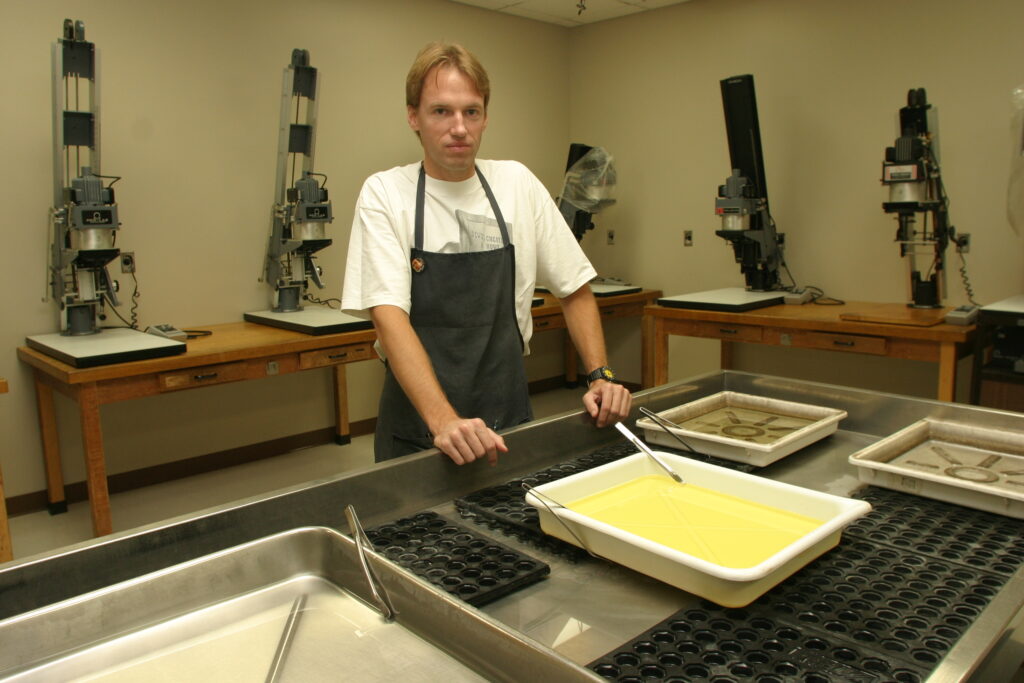 Photography Academic Lab Technician Mark Magavern stands in the photography dark room with 20 black-and-white photo enlargers. When the journalism program transitioned to digital photography, the room was converted to a smaller studio for table top illustrations. Archive photo.
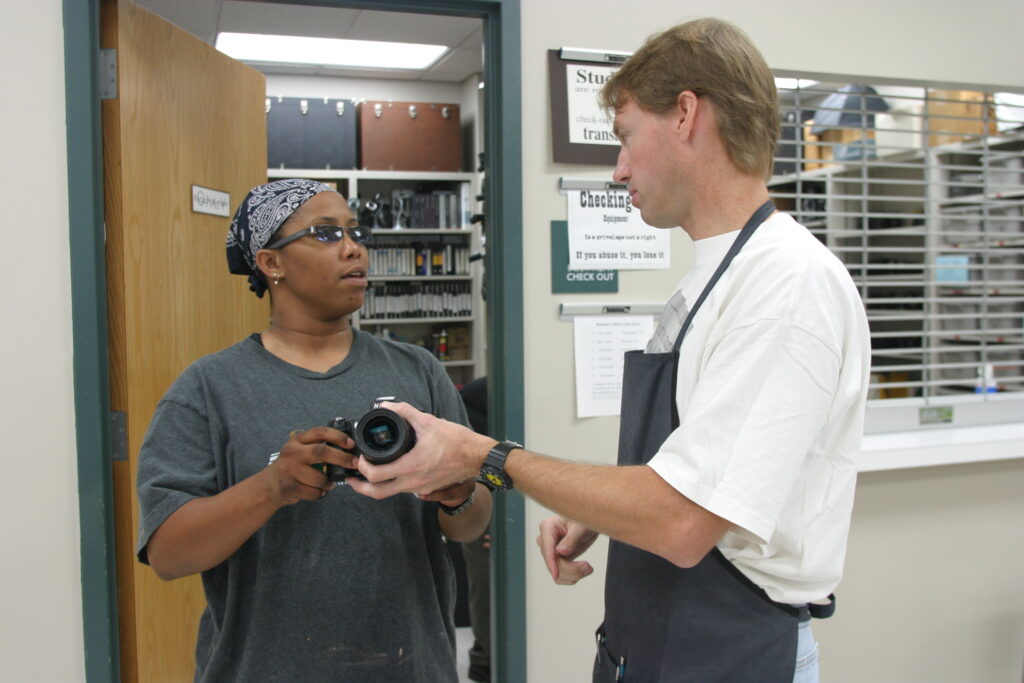 Photography Academic Lab Technician Mark Magavern advises a student on camera settings in SAC’s photography lab. Archive photo.
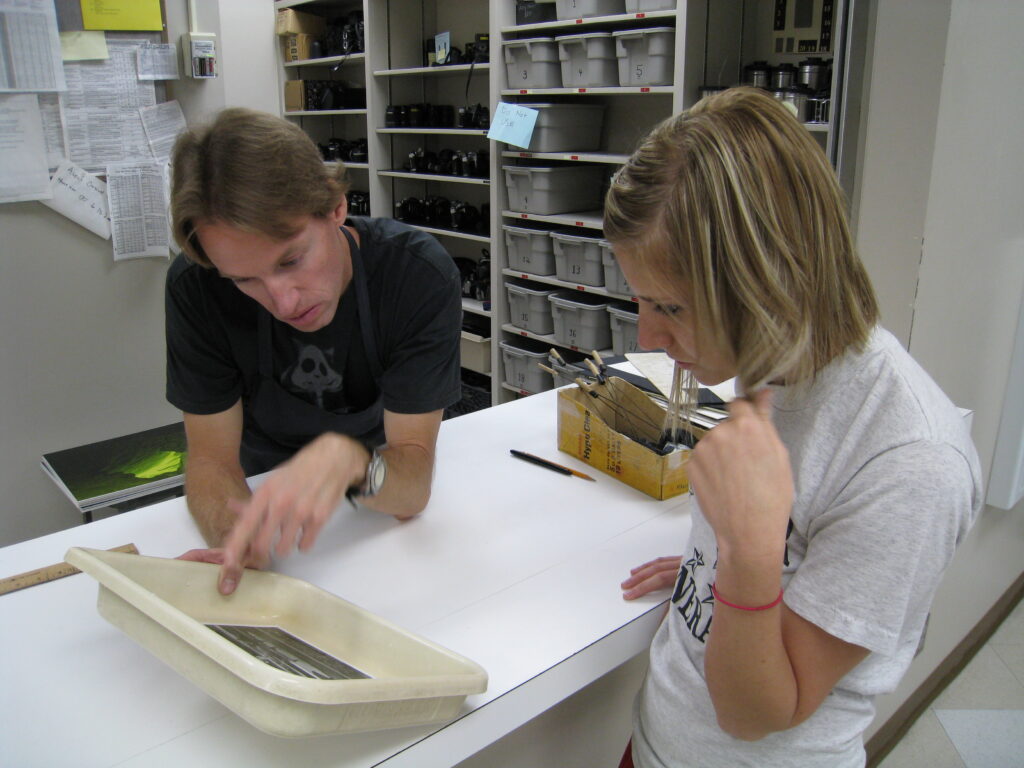 Photography Academic Lab Technician Mark Magavern goes over exposure and contrast with a student working in the black and white darkroom. Students used to expose their images and bring them out into the light to get direction on what to do to improve them. Archive photo.
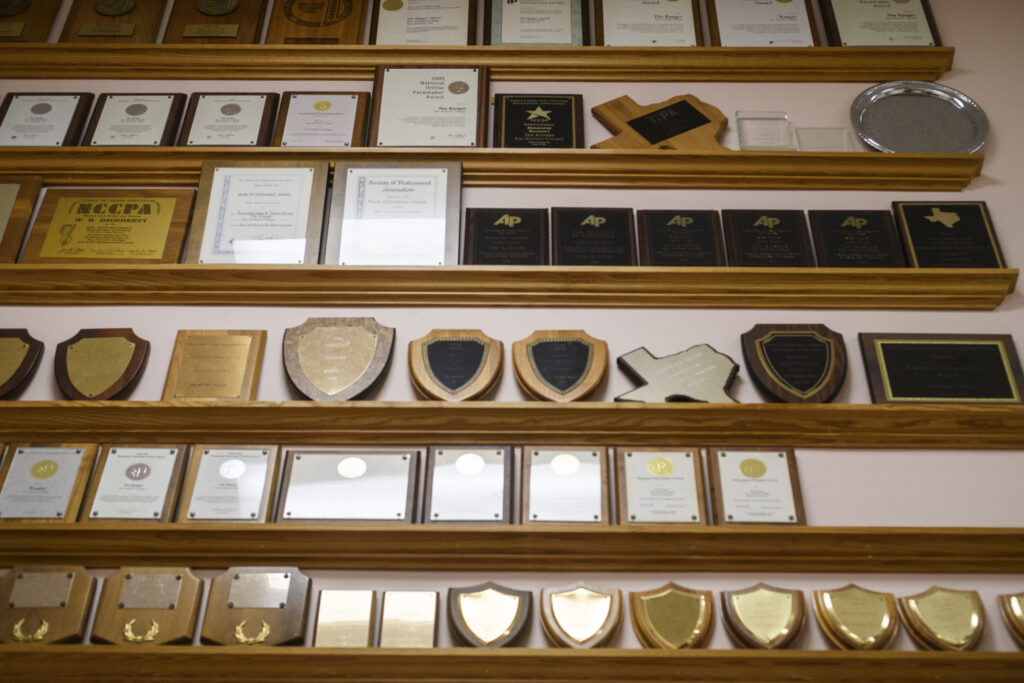 The Ranger and its staff won dozens of college journalism awards over the years, which hung on walls in the journalism department. Archive photo.
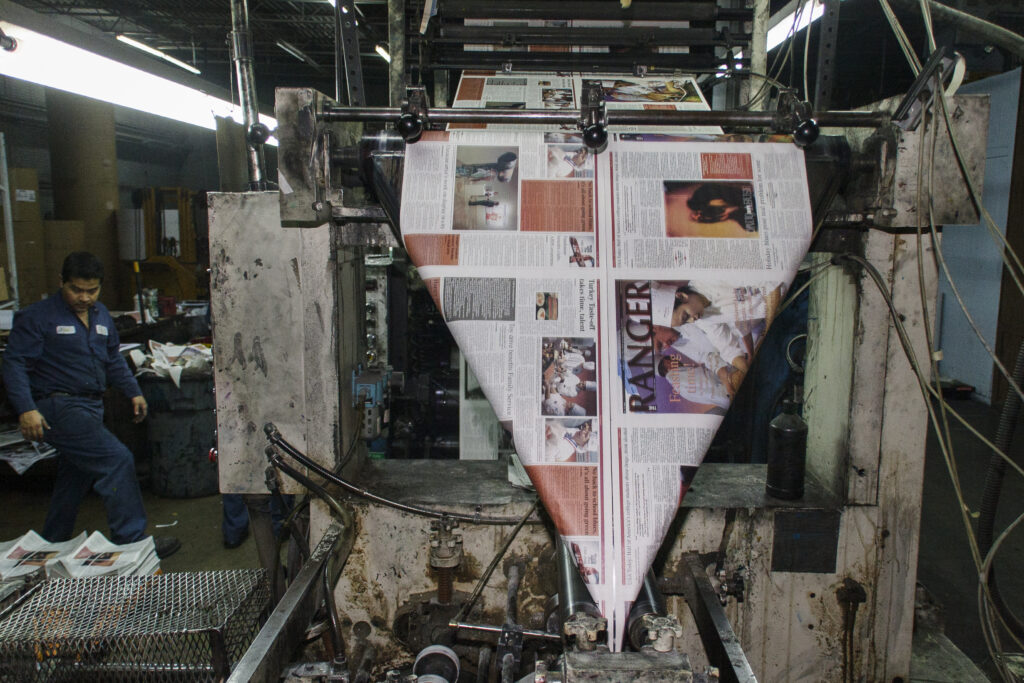 The Ranger being printed. Archive photo.
After graduating from Judson High School, Magavern took a photography class in the summer of 1986 under Jerry Townsend, a photography instructor and advisor for the Ranger, then SAC’s student newspaper. When he finished the class, Townsend recruited Magavern to be a staff photographer for the Ranger. Magavern worked as a Ranger staffer for several semesters, working his way up from photographer to photo editor and then a photo advisor.
From 1986 to 1992, Magavern’s photos and photo stories appeared in the student newspaper, sometimes under a byline, sometimes in tiny photo credits, sometimes behind the scenes as the person guiding students through their first assignments.
Whether he was shooting, editing or helping young photographers in the lab, Magavern’s hard work and humble leadership was a vital component of the Ranger’s success, according to Rodolfo “Rudy” Gonzalez, a Pulitzer-Prize-winning photojournalist whose career began when he was a SAC student and staff photographer at the Ranger. Magavern was his photo editor.
“Mark is one of the reasons I had the opportunity to do journalism,” Gonzalez said. “He is a gateway drug. Any opportunity I wanted to pursue — Mark always said, ‘Do it.’”
Gonzalez said Magavern’s positive and encouraging leadership had a significant impact on him.
“Mark’s support was sort of like, ‘Hey, I’m happy for you. Way to go, because you’re succeeding,” Gonzalez said.
Magavern said one of his favorite aspects of his job is helping students unlock their potential.
“I like watching a student come in and not know anything, and then seeing them progress and become a good photographer,” Magavern said. “It’s fun being an advisor because you can point students in the right direction, give them input and watch them grow.”
Magavern said he doesn’t have a single favorite story from his years as a photojournalist, but one story he recalls fondly is a photo story he produced for the Fourth Write, SAC’s now defunct semiannual magazine, on the city’s animal control facility. His images were later published in the San Antonio Light and went on to win an award, a recognition he says came simply from trying to make work that mattered.
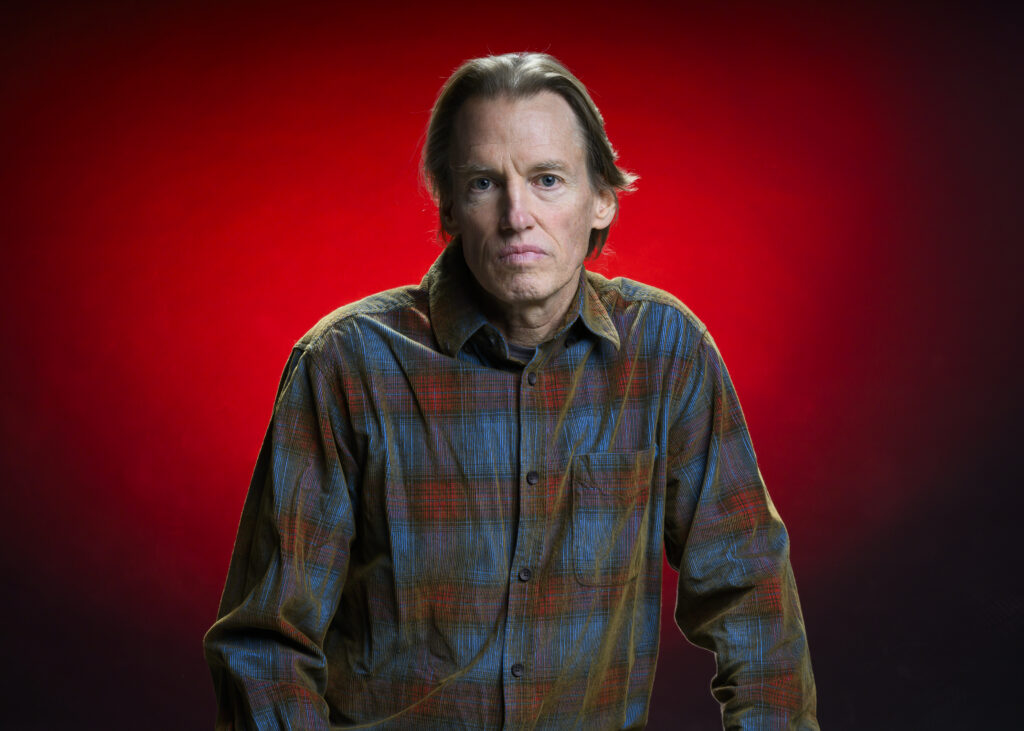 Mark Magavern is an award-winning photojournalist who has photographed diverse subjects, including Houston Astros games, Pope John Paul II and many tragic events and natural disasters. Photo by Jacob R. Lopez.
At the Ranger, he earned dozens of awards from the Texas Intercollegiate Press Association, the Society of Professional Journalists, and the Texas Community College Journalism Association.
“It wasn’t ever something I set out to do. I don’t have them up on the wall anywhere. To me, it’s just kind of a reward for working hard,” Magavern said.
Magavern’s passion and work ethic earned him work as a freelancer for the San Antonio Light and Agence France-Presse. He photographed diverse subjects, including Houston Astros games, Pope John Paul II and many tragic events and natural disasters. His grit and competitive nature often led him into dangerous situations.
At a drag race in Houston, his tendency to get as close as possible to his subjects led to the hair on his arms getting singed by a dragster’s jet engine.
“Hazards of the profession,” Magavern said with a shrug and a smile.
As an intern in the Houston Post’s newsroom, Magavern always sought to perform at the same level of the professional staffers. He wanted to have a photo published with every story he was assigned.
“They would send me out with other photographers to learn the city, and I started out-shooting them,” Magavern said. “I was going to come out with the best picture I could. I didn’t care who they were.”
Magavern said he was drawn to photojournalism because it’s “like an Indiana Jones adventure.”
“Every day you go to work, and you don’t know what you’re going to do,” he said. “It just unfolds in front of you, and it’s a different thing every day. So it’s not like most jobs. Every day, you learn something about what you are shooting, so it’s like your own personal class on something. You hear and see things that the average person doesn’t see.”
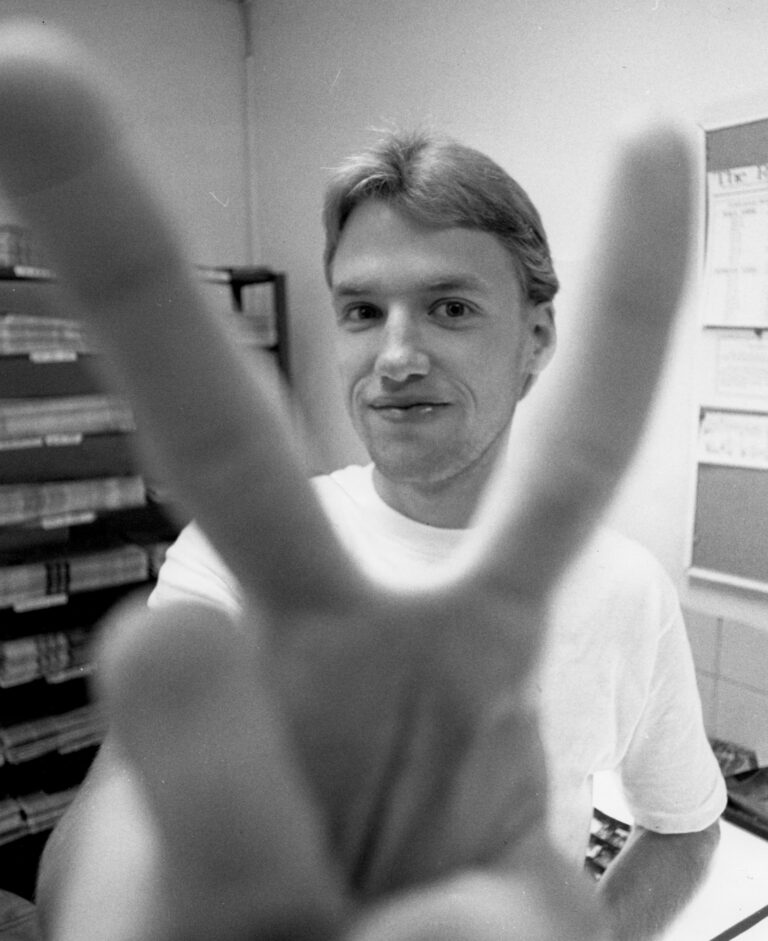 Ranger photo advisor Mark Magavern demonstrates to students how visual distortion works in wide-angle lenses. “The closer the subject, the more distortion there is,” he said. Archive photo.
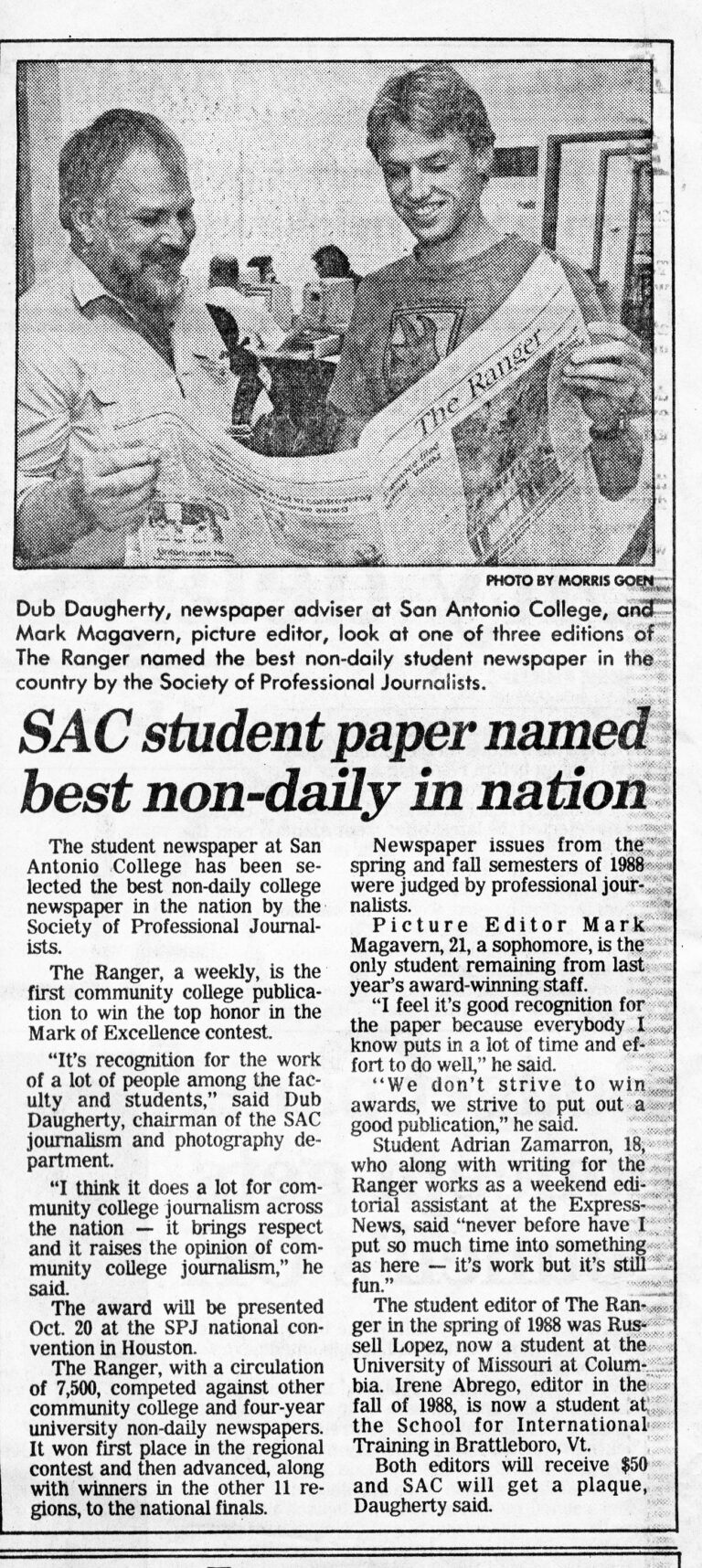 A newspaper clipping of the story announcing the Ranger’s selection by the Society of Professional Journalists as the best non-daily college newspaper in the nation. Archive image.
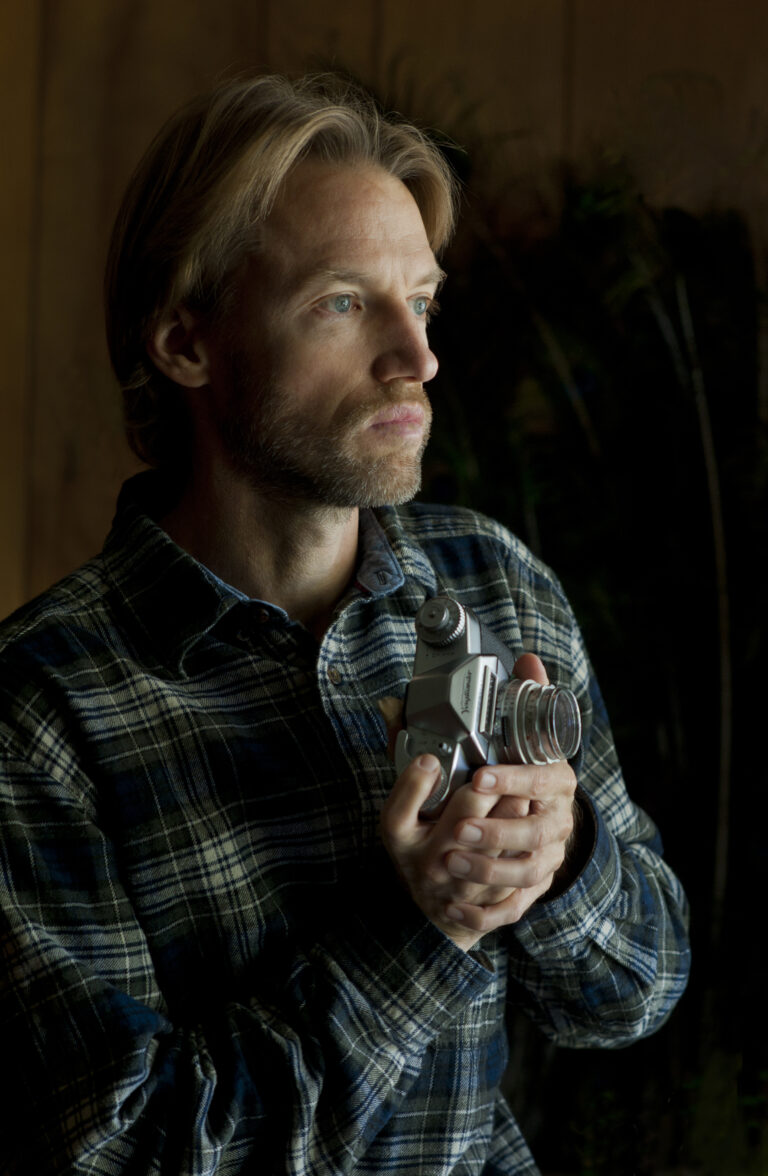 Self portrait of Mark Magavern.
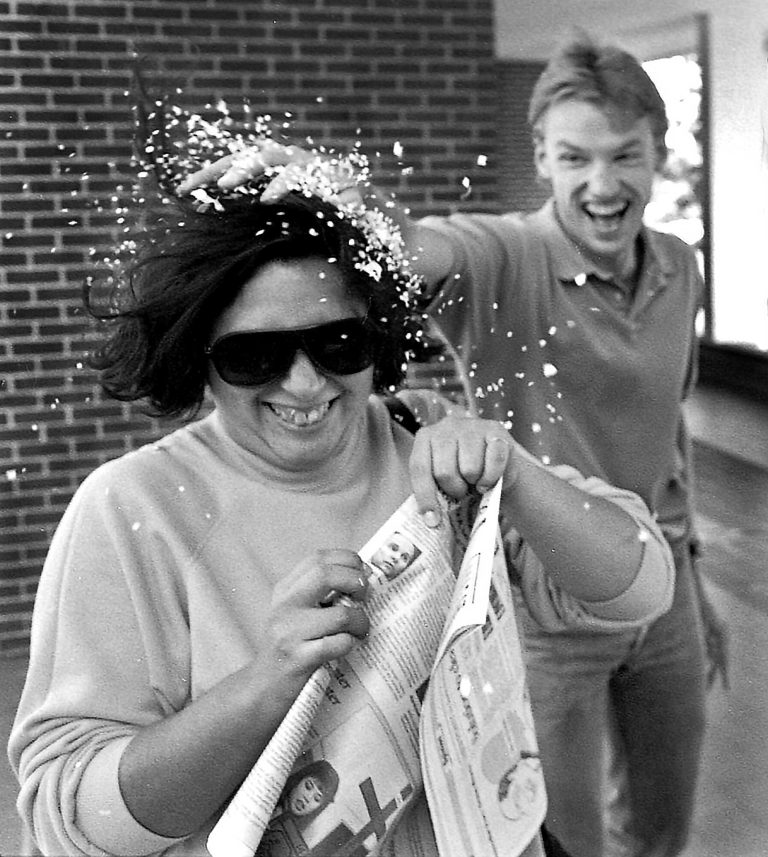 While working on the Ranger, Mark Magavern shows retired SAC Journalism Professor Irene Abrego the spirit of San Antonio during Fiesta. Archive photo.
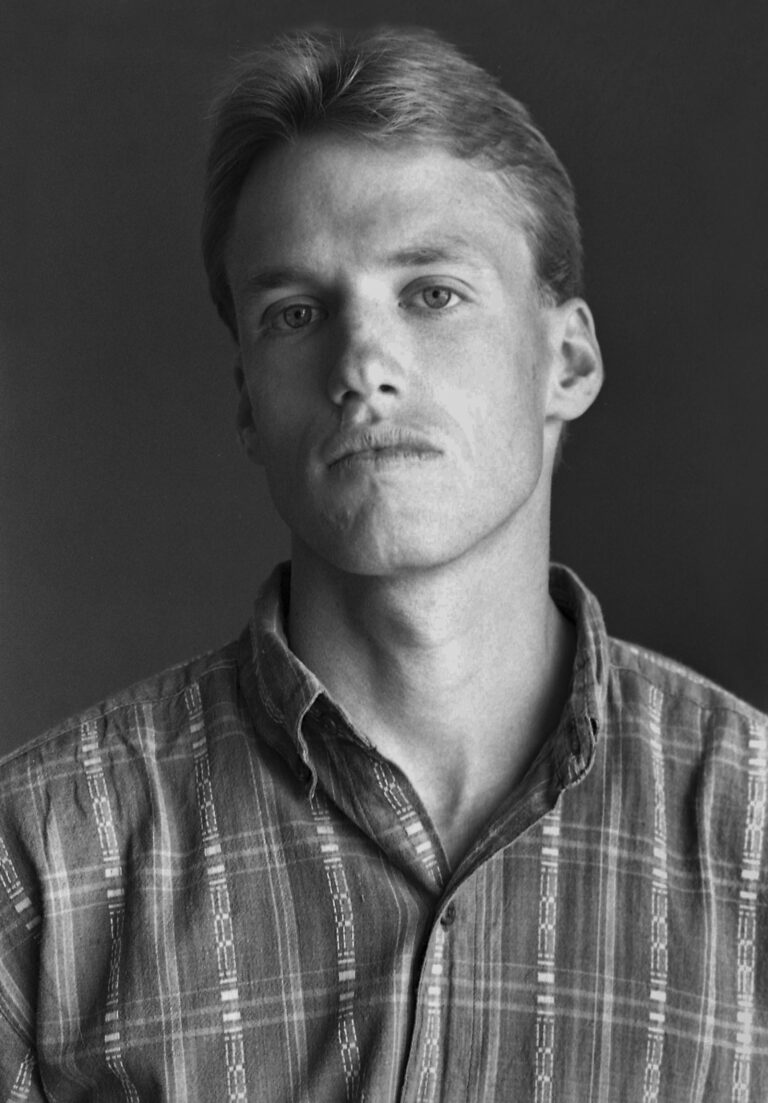 Archive photo of Academic Lab Technician Mark Magavern.
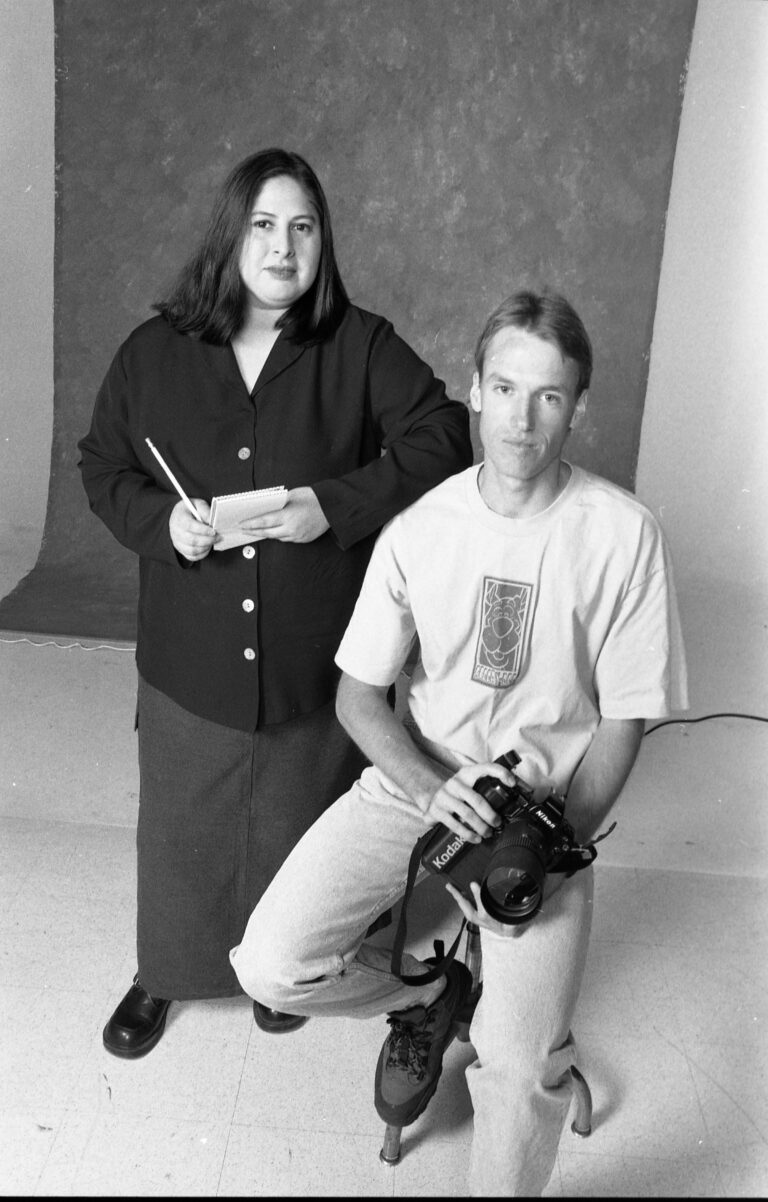 Former Ranger Editor Estela Duran and former Ranger photographer Mark Magavern were featured in an advertising campaign for the college’s journalism program. Archive photo.
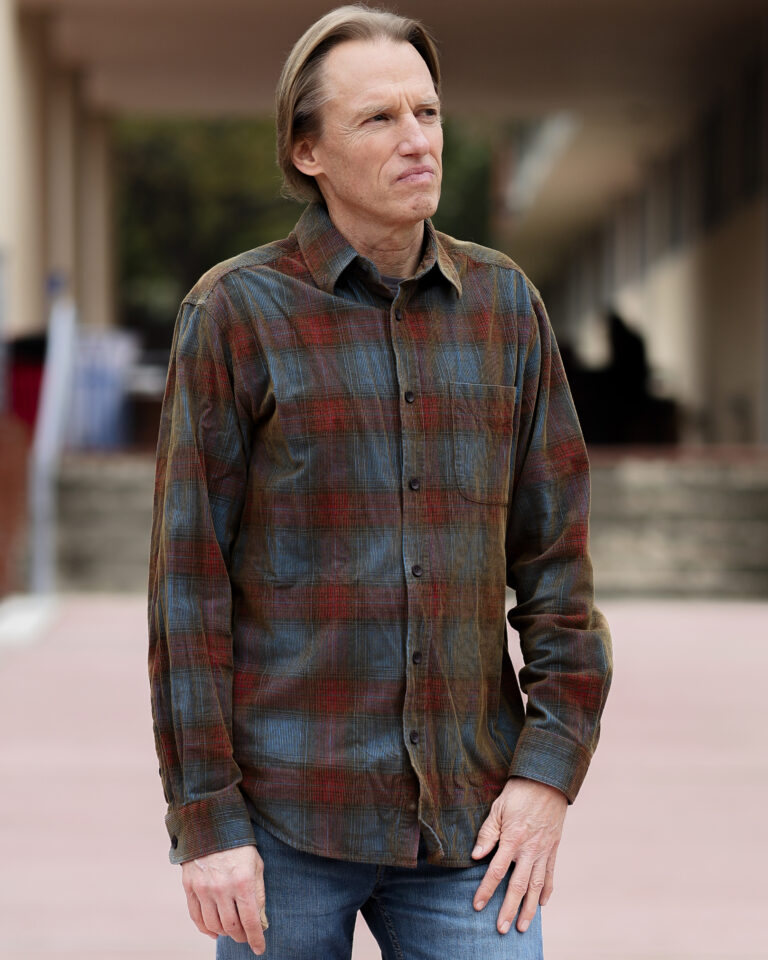 Mark Magavern earned associate degrees in photography and journalism from SAC. He started as a staff photographer for the Ranger before interning at the Huston Post and freelancing for the San Antonio Light. He has served as an academic lab technician in SAC’s photography program for 31 years. Photo by Jacob R. Lopez.
In 1992, Magavern was hired at SAC as a temporary photo lab technician, and he decided to stop attending classes and focus all his energy on his job duties, which included being a photo advisor for the Ranger.
By 1993, he earned the full-time position that he still holds, and in 2017, he completed the handful of classes needed to earn his two associate degrees from SAC — one in photography and one in journalism.
“I probably wouldn’t have completed those degrees if my colleagues hadn’t pushed me to finish,” Magavern said. “[Journalism instructors] Marianne Odom and Irene Abrego and [Lab Technician and Ranger Advisor] Tricia Buchhorn all ganged up on me and made sure I finished my classes.”
Rocke said Magavern is very passionate about the journalism program’s mission of preparing the next generation of journalists to serve as members of the Fourth Estate and be watchdogs for democracy.
“We are extremely lucky to have someone with as much experience, knowledge, and compassion as Mark has,” Rocke said.
For 30 years, Magavern has weathered the ups and downs of SAC’s journalism program, and he still humbly supports students and faculty members — issuing gear, editing photos and helping students grow into confident, professional photojournalists.
Read Next: West-Side Pride, Culture Drives Emmy-Winning Journalist, SAC Alum